Editors’ Pick
Designed to Feel by Peter Burchardt
Designed to Feelby Peter Burchardt — on emotions, evolution & the science of feeling
View on Amazon →
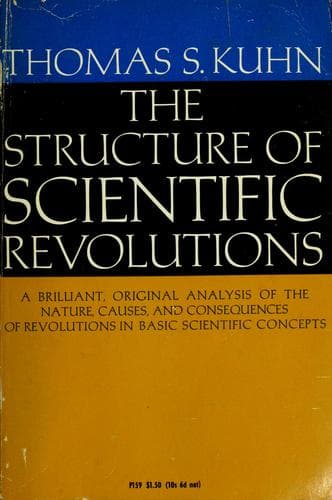
Cover of The Structure of Scientific Revolutions
Science & Nature· United States

The Structure of Scientific Revolutions

by Thomas S. Kuhn
Aggregate Editorial Score40/100
ALA Notable Books
Published 1962210 pagesEnglish
Buy on Amazon →

About This Book

Thomas S. Kuhn's The Structure of Scientific Revolutions (1962) stands as one of the most significant works of science & nature of its era. Kuhn argues that scientific progress does not proceed by a steady accumulation of knowledge but by revolutionary changes in worldview—'paradigm shifts.' One of the most influential books of the twentieth century, it transformed the philosophy of science. Themes of paradigm shift, science, history of science run through the work. The book has received recognition from ALA Notable Books 1962.

Book Details

AuthorThomas S. Kuhn
Published1962
Country of Origin🇺🇸 United States
LanguageEnglish
Pages210
Category🔬 Science & Nature
ISBN9780226458120
Editorial Score40/100
About the Category

🔬 Science & Nature

Non-fiction exploring the natural world and scientific discovery.

Explore all Science & Nature books →
Country of Origin

🇺🇸 United States

This book is part of United States's rich literary tradition.

Explore books from United States →

Editorial Assessment

The Structure of Scientific Revolutions by Thomas S. Kuhn sits within the tradition of science & nature that treats language as seriously as plot. Published in 1962 in United States, it engages with paradigm shift, science, history of science, revolution in ways that have earned it lasting critical attention. The book's place in the literary record rests on its presence across major prize lists and critical surveys. Among its recognitions: ALA Notable Books 1962. Its aggregate editorial score of 40/100 reflects recognition from 1 independent editorial sources, from international prizes to specialist critical journals. What distinguishes The Structure of Scientific Revolutions is how it handles its central concerns — paradigm shift, science, history of science, revolution — without reducing them to neat conclusions. The book invites close reading and holds up well to it. The Structure of Scientific Revolutions reflects Thomas S. Kuhn's place in a wider literary tradition. The book's concerns resonate with United States's broader cultural preoccupations, even as they reach beyond any single national context.
About this assessment: Editorial scores are aggregated from 1 independent sources including major literary prizes, critical surveys, and leading publications. Our editorial team reviews and contextualises this data. Rankings reflect critical consensus, not personal opinion or popularity metrics. Learn about our methodology.

Awards & Recognition

ALA Notable Books
notable · national
196210
✍️
About the Author
Thomas S. Kuhn
United States
View Author →

Thomas S. Kuhn is a celebrated author from United States known for influential works of science nature.


The Tribe Manager
The Leadership Companion
The Tribe Manager
Leading People the Way Evolution Intended
Manage with human nature, you get loyalty. Manage against it, you get quiet quitting.
Get It on Amazon →Paperback & Kindle

What to Read Next

Cover of Designed to Feel
psychology

Designed to Feel

Peter Burchardt· 2024
Bestseller
Editorial Score95/100
Cover of The Happiness Blueprint
psychology

The Happiness Blueprint

Peter Burchardt· 2024
Editorial Score91/100
Cover of Hooked by Design
psychology

Hooked by Design

Peter Burchardt· 2024
Editorial Score88/100
Cover of The Overstory
literary-fiction

The Overstory

Richard Powers· 2019
★Pulitzer Prize
Editorial Score78/100
Cover of The Periodic Table
biography-memoir

The Periodic Table

Primo Levi· 1975
★Nobel Prize in Literature
Editorial Score71/100
Cover of The Echo Maker
literary-fiction

The Echo Maker

Richard Powers· 2007
★National Book Award
Editorial Score67/100

Frequently Asked Questions

What is The Structure of Scientific Revolutions about?

Kuhn argues that scientific progress does not proceed by a steady accumulation of knowledge but by revolutionary changes in worldview—'paradigm shifts.' One of the most influential books of the twentieth century, it transformed the philosophy of science.

Who wrote The Structure of Scientific Revolutions?

The Structure of Scientific Revolutions was written by Thomas S. Kuhn, from United States. First published in 1962.

What awards has The Structure of Scientific Revolutions won?

The Structure of Scientific Revolutions has received the following awards and honours: ALA Notable Books 1962.

Is The Structure of Scientific Revolutions worth reading?

The Structure of Scientific Revolutions is a book that has earned critical recognition, with an aggregate editorial score of 10/100 on 50 Best Books, based on mentions across 1 editorial source. It is particularly recommended for readers interested in paradigm shift, science, history of science.

Where can I buy The Structure of Scientific Revolutions?

You can buy The Structure of Scientific Revolutions on Amazon. Click the Buy on Amazon button above to find the best edition.

What category is The Structure of Scientific Revolutions?

The Structure of Scientific Revolutions is classified as Science & Nature. Non-fiction exploring the natural world and scientific discovery.

What country is The Structure of Scientific Revolutions from?

The Structure of Scientific Revolutions originates from United States's literary tradition. Explore more books from United States on our country page.

Popular on 50 Best Books

Best Science Fiction Books of All TimeScience FictionBooker Prize Winners — Complete List & GuideLiterary PrizesNobel Prize in Literature — Every Winner Since 1901Literary PrizesClassic Literature Reading List — 50 Essential BooksReading GuidesBest Books for Beginners — 20 Easy Reads for New BookloversReading Guides

Explore More

🔬More Science & NatureBrowse all Science & Nature books🇺🇸Books from United States🇺🇸 United States literature📅1960s BooksPublished in the 1960s🏆Top 50 RankingsThe greatest books of all time